SEBI Digital Accessibility Audit Preparation: C1 to C4 Explained

For regulated entities, digital accessibility is becoming part of product governance and reporting readiness.
The work is not only about finding accessibility issues. It is about showing that the organization understands its investor-facing platforms, has reviewed them against relevant standards, and can document remediation.
This article explains the practical preparation behind SEBI digital accessibility audit support.
Start with platform visibility
Many accessibility programs fail early because the scope is incomplete.
An organization may remember the public website but forget:
Investor portals
Mobile apps
PDF disclosures
Forms
Logged-in dashboards
Support workflows
Downloadable statements
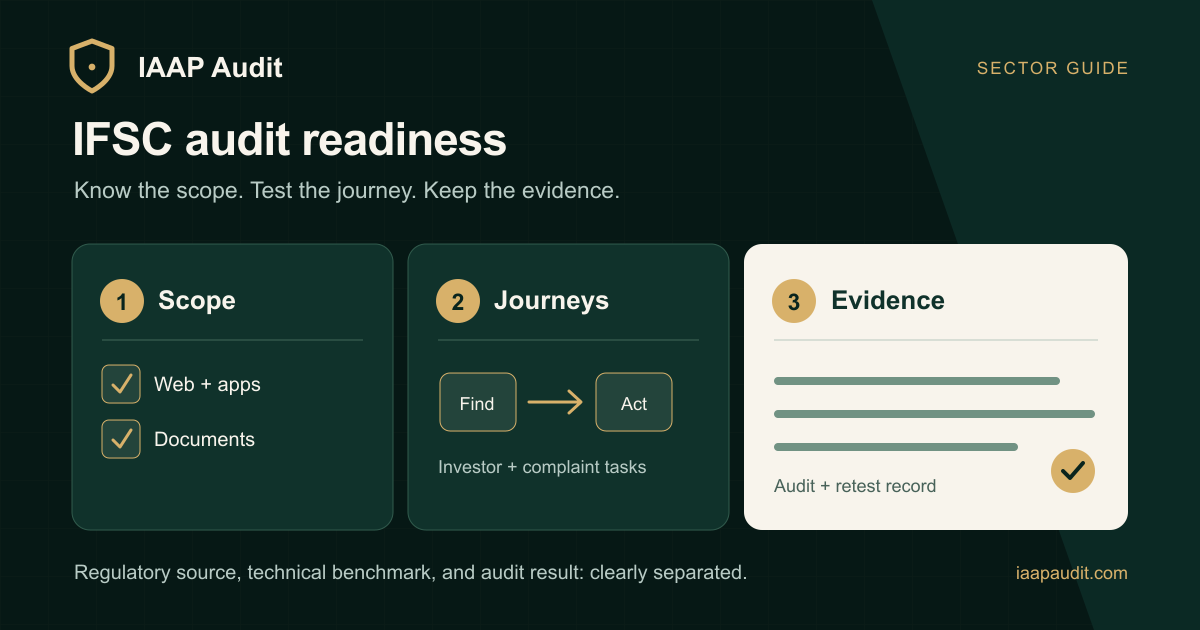
Before testing begins, build a platform inventory that reflects how investors actually interact with the organization.
Treat C1 as the foundation
C1-style inventory work is not administrative overhead. It is the base layer for the audit.
If the platform list is incomplete, the audit scope will be incomplete. If the scope is incomplete, the report may not support the intended reporting or governance outcome.
Prepare for C3 reporting
C3 is the initial accessibility audit reporting stage.
The report should help both compliance teams and delivery teams. That means it should include evidence that can be reviewed and actions that can be implemented.
A practical C3 report should include:
Platforms and journeys reviewed
Standards mapped
Findings and observations
Severity and impact
Screenshots or evidence
Selectors, URLs, or reproduction notes
Remediation direction
Timelines or action plan
C4 needs a closure trail
C4 is where teams need to show what happened after the initial audit.
It should answer:
Which findings were remediated?
What evidence supports closure?
Which items remain pending?
Was retesting completed?
Does the final status match the original scope?
Without this traceability, final reporting becomes difficult to defend.
Automated testing helps, but it is not the whole audit
Automated scans are useful for baseline detection. They can identify many common issues quickly.
But they cannot fully evaluate keyboard experience, screen reader interpretation, document quality, error clarity, or whether a user can complete a critical journey.
The audit scope should match the risk of the platform.
Conclusion
SEBI digital accessibility audit preparation should be treated as a structured evidence process.
Inventory, scope, audit findings, remediation, and retest evidence all need to connect.
That connection is what turns accessibility work into report-ready documentation.
Read the original IAAP Audit article here:
https://iaapaudit.com/blog/sebi-digital-accessibility-circular-guide
About the author
- IAAP Audit provides structured accessibility audit services for organizations that need evidence-led review of websites, web applications, mobile apps, PDFs, documents, design systems, and critical user journeys. Our audits are designed for compliance, procurement, governance, and remediation teams that need clear findings, standards mapping, severity grading, screenshots, selectors, remediation guidance, and retest evidence. Audit scopes can be mapped to WCAG 2.1 AA, WCAG 2.2 AA, IS 17802, GIGW, Section 508, and EN 301 549. We also support SEBI digital accessibility audit preparation, including C1 platform inventory, C3 initial audit reporting, C4 remediation/retest evidence, and report-ready documentation for agreed scopes. IAAP Audit works with financial services, SaaS, education, healthcare, e-commerce, public-sector vendors, and compliance-sensitive digital teams that need practical accessibility review without vague reporting. Our focus is simple: identify barriers, document evidence, prioritize risk, guide remediation, and help teams move toward more accessible digital services.