Section 508 vs WCAG
Section 508 vs WCAG explained for ICT procurement: ACRs, VPATs, vendor claims, accessibility testing, remediation, and evidence.
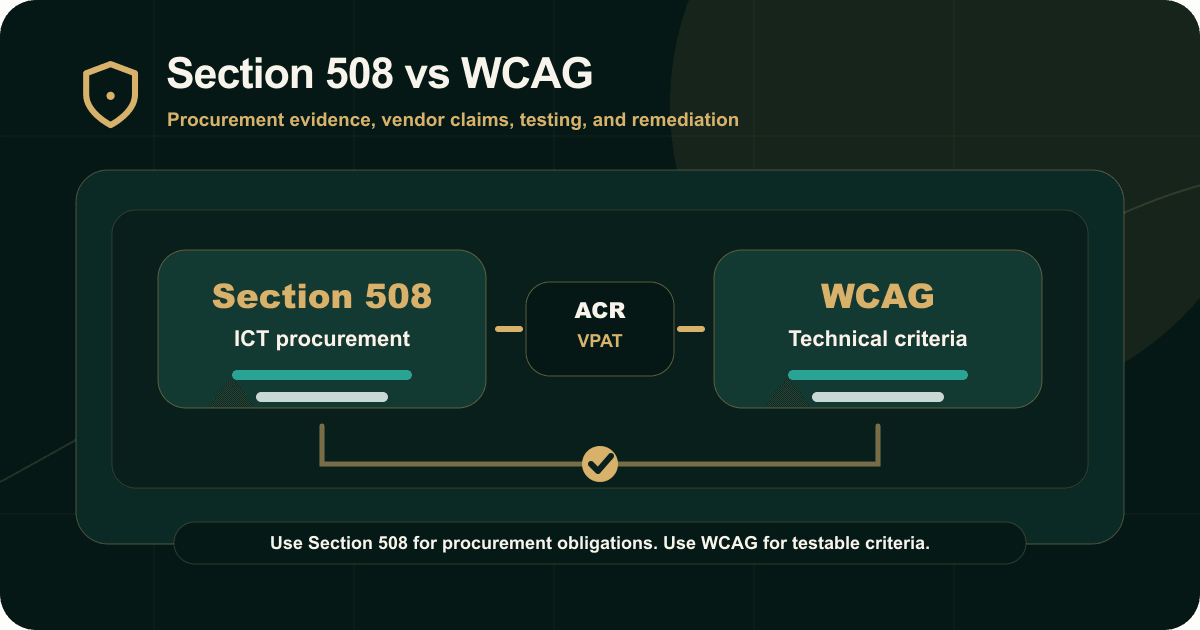
Section 508 and WCAG are often mentioned together in ICT procurement.
They are related, but they play different roles.
The short version
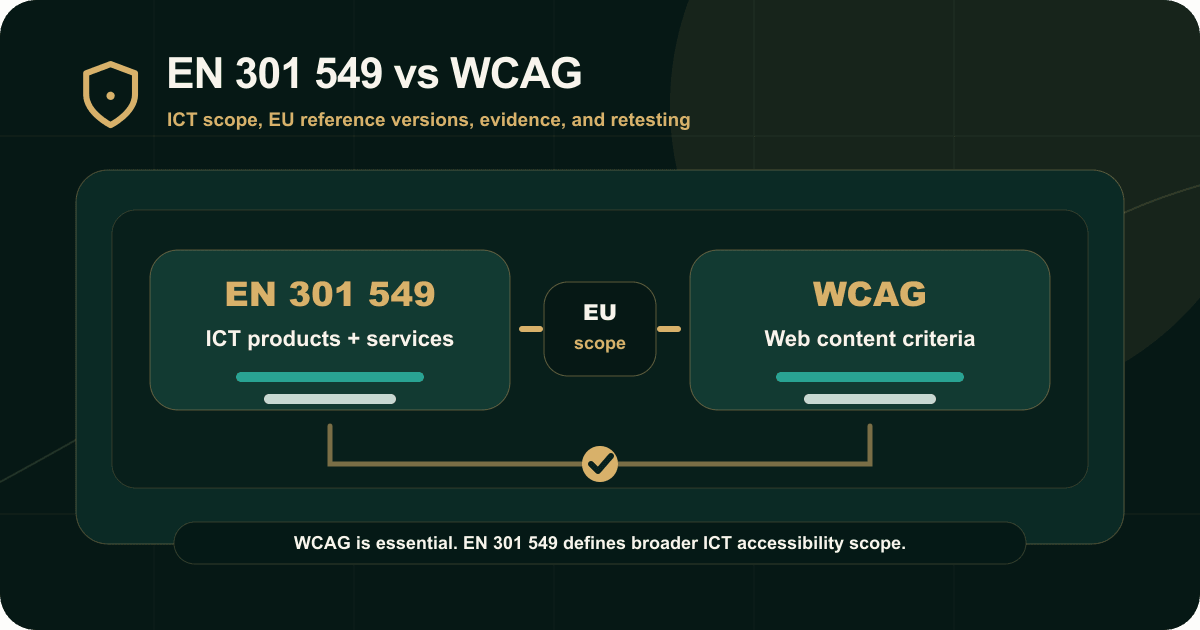
Section 508 is the legal and procurement requirement for U.S. federal ICT accessibility.
WCAG is a technical accessibility standard used to evaluate web content and related digital experiences.
Why procurement teams need both
Procurement needs more than standards language.
Teams should request vendor accessibility evidence, review ACRs or VPATs, define testing responsibilities, validate important workflows, and require remediation for gaps.
What evidence should be reviewed
Useful evidence includes:
- ACR or VPAT.
- Product version and scope.
- Testing method.
- Supported and partially supported criteria.
- Known exceptions.
- Remediation plan.
- Independent testing results.
- Retest evidence.
Conclusion
Section 508 tells procurement teams accessibility must be handled. WCAG helps technical teams test the experience.
Together, they support better ICT buying decisions when evidence is reviewed carefully.
Read the original guide on IAAP Audit: https://iaapaudit.com/blog/section-508-vs-wcag-procurement-teams